
Kapalbhati Pranayama: How to Do It, Benefits, Timing and Safety
Learn how to do Kapalbhati Pranayama with clear beginner steps, breathing guidance, benefits, timing, common mistakes and important precautions.
Kapalbhati Pranayama is an energising yogic cleansing and breathing practice. You make short, active exhalations through the nose by drawing the lower abdomen in. Each inhalation happens naturally when the abdomen relaxes.
This beginner guide explains the steps, breathing pattern, pace, possible benefits, practice timing and precautions. The method should feel controlled and steady, never aggressive.
What Is Kapalbhati Pranayama?
Kapalbhati means “skull-shining practice”. Kapala refers to the skull or forehead, while bhati means shining or illuminating.
In classical Hatha Yoga, Kapalbhati is taught as a Shatkarma, or cleansing practice. Modern yoga schools often include it under pranayama because breath is the main tool. Both descriptions are commonly used.
Traditional understanding connects the practice with clearing heaviness and bringing alertness and clarity to the mind. It is often used before pranayama or meditation to help the practitioner feel awake, steady and attentive.
How to Do Kapalbhati Pranayama Correctly
The main effort is in the exhalation. Exhale actively through the nose while drawing the lower abdomen in, then release the abdomen so the inhalation flows in naturally.
Before You Begin
Practise on an empty stomach. Early morning is a convenient time. If you practise later, leave about three to four hours after a main meal or about one and a half to two hours after a light snack or tea.
Sit in a comfortable cross-legged position such as Sukhasana or Padmasana. Keep the spine tall without becoming stiff. Rest your hands on your knees with the palms facing upwards. Soften the face and shoulders, and allow a gentle smile.
If you have high blood pressure, heart concerns, epilepsy, frequent dizziness, a hernia, severe ulcers, recent abdominal surgery or another significant health concern, read the safety section and seek suitable guidance before practising.
This beginner method does not include breath retention or muscular locks.
Step-by-Step Kapalbhati Technique
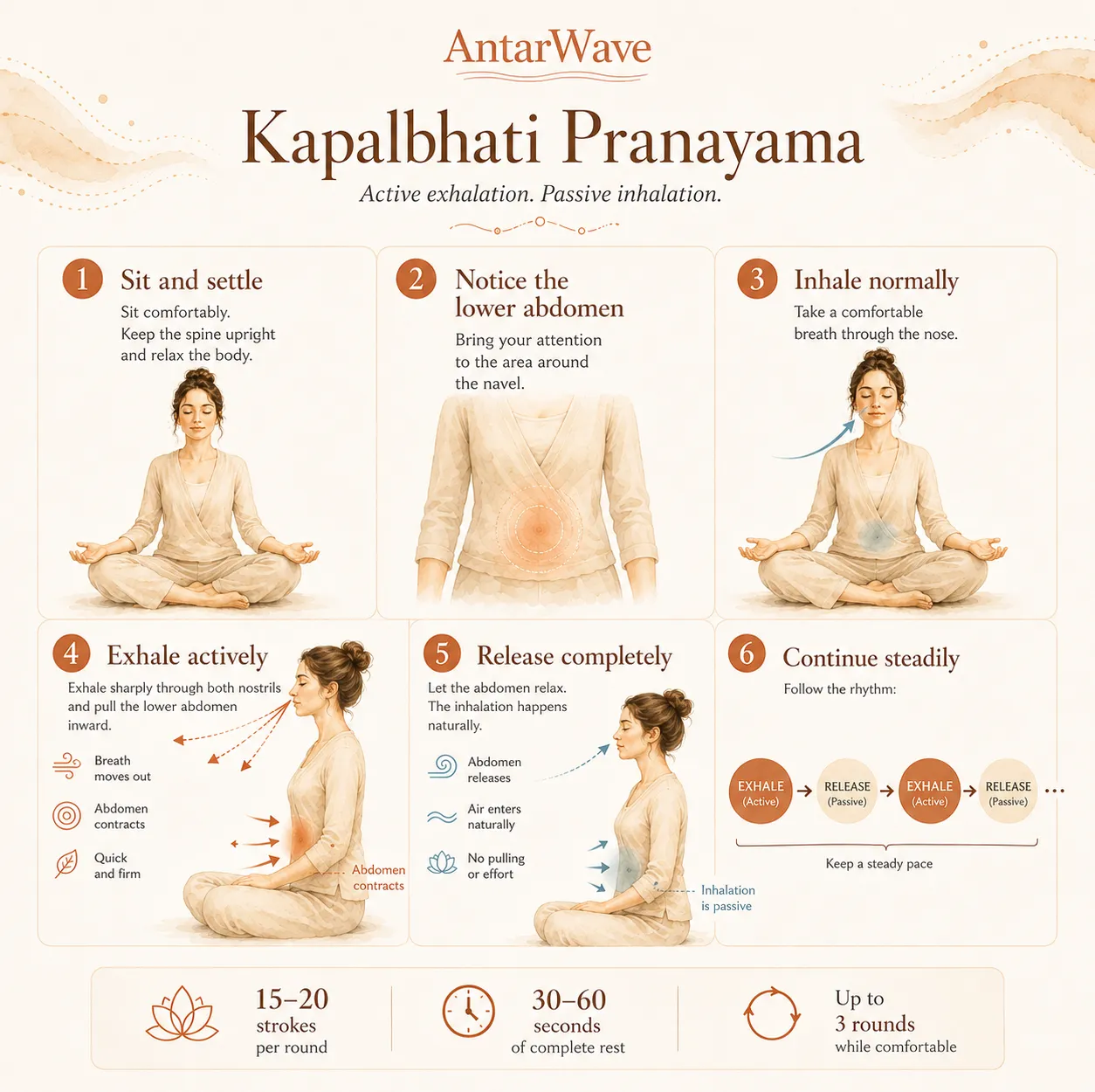
- Sit steadily and close your eyes if that feels comfortable.
- Bring your attention to the lower abdomen around the navel.
- Take one soft breath in and breathe out naturally to settle.
- Inhale normally through the nose.
- Exhale forcefully through both nostrils. At the same moment, quickly draw the lower abdomen inward, as if bringing the navel towards the spine. The movement should be quick and controlled, without straining the face, chest or shoulders.
- Release the abdomen immediately. Do not pull air in. The inhalation should happen by itself as the abdomen relaxes.
- Continue at a steady pace: active exhalation, passive inhalation.
- Complete 15 to 20 strokes, then stop and breathe normally.
- Rest for 30 to 60 seconds with the eyes closed. Relax the abdomen and notice how the body and mind feel.
- Complete up to three rounds if you remain comfortable.
One stroke means one active exhalation followed by one passive inhalation. One round is a set of strokes followed by a complete rest.
Breathing Pattern, Pace and Repetitions
Begin at about one stroke per second or slightly slower. The exhalation should be brief and clear, but not harsh. The inhalation should remain quiet and automatic.
Start with three rounds of 15 to 20 strokes. Rest for 30 to 60 seconds between rounds. Stay at this level until the pattern feels steady and relaxed.
Experienced practitioners may gradually increase to 30 to 50 strokes per round under teacher guidance. A higher count is not necessary for a useful practice.
What It May Feel Like
After a comfortable round, you may notice mild warmth, physical lightness or greater alertness. The resting phase may bring a quieter and clearer feeling.
Experiences differ from person to person. Let comfort, a natural inhalation and a relaxed upper body guide your pace.
Common Mistakes
- Forcing the inhalation: Release the abdomen and allow air to enter naturally.
- Moving the chest and shoulders: Keep the upper body quiet and let the lower abdomen create the exhalation.
- Tensing the face: Relax the jaw, forehead and nostrils.
- Pumping too fast: Slow down until every exhalation is clear and controlled.
- Jerking the torso: Use a compact abdominal action rather than moving the whole body.
- Holding the breath: Maintain the active-exhale, passive-inhale rhythm without pauses.
- Skipping rest: Stop fully between rounds and observe the effect before continuing.
Pause the practice if you feel dizzy, light-headed, short of breath, nauseous or unusually anxious. Also stop for abdominal pain, chest tightness or pressure in the head. Return to natural breathing and rest.
Best Time, Duration and Frequency
Early morning on an empty stomach is a practical time for Kapalbhati. You can also practise in the late afternoon or early evening before dinner if enough time has passed after food.
Kapalbhati is activating. Avoid placing it immediately before sleep if it makes you feel more alert. It can fit near the beginning of a yoga or breathwork session, or before meditation when you want to move from dullness towards attentive stillness.
How Long Should a Beginner Practise?
A beginner session can remain within three rounds of 15 to 20 strokes, with 30 to 60 seconds of rest between rounds. The whole practice may take about three to five minutes.
Practise at a comfortable pace instead of trying to fill the whole time with rapid breathing. Increase the count only when the inhalation stays passive, the upper body remains relaxed and the rhythm causes no strain.
Consistency and control matter more than a long session. Thirty minutes is not a suitable starting target.
Kapalbhati Pranayama Benefits and Uses
Kapalbhati is traditionally practised for cleansing, alertness and mental clarity. Its most immediate value for a beginner may be learning to coordinate the breath and abdomen, then observing the quiet period that follows each active round.
Alertness and Preparation for Meditation
The quick exhalations make Kapalbhati an activating practice. It may help shift the mind away from sleepiness or heaviness before meditation, study or morning yoga.
The rest after each round is equally valuable. It gives you time to notice the change from active breathing to natural stillness.
Abdominal and Breathing Awareness
Each exhalation uses a controlled inward movement of the lower abdomen. Regular practice can develop better awareness of this area and improve coordination between the abdominal movement and breath.
The aim is control rather than force. Kapalbhati should not be used to push through abdominal discomfort or fatigue.
Traditional Cleansing
In yoga, Kapalbhati is understood as a cleansing practice that prepares the practitioner for deeper breathwork and meditation. This traditional idea refers to removing heaviness and supporting clarity, not to a medical detox treatment.
Weight Loss, Belly Fat and Realistic Expectations
Kapalbhati does not remove fat from the belly alone. Fat loss happens across the body through a consistent balance of food, daily movement, exercise, sleep and other health factors.
The repeated abdominal action may improve muscle awareness and tone. A more engaged abdominal wall and better posture can affect how the midsection feels or looks, but this is different from losing body fat.
Use Kapalbhati as one part of a balanced routine. It does not replace nutritious food, walking, strength or aerobic exercise, and adequate sleep.
What Does Scientific Research Say About Kapalbhati?
Scientific research on Kapalbhati is growing. A 2025 systematic review of four randomised trials reported promising findings in respiratory and cognitive measures.
The review also noted that the research base is still small and that some explanations of how Kapalbhati affects the nervous system remain theoretical. At present, the research supports continued study of the practice, while the strongest practical focus remains correct technique, gradual progression and individual comfort.
Safety, Precautions and Contraindications
Kapalbhati should feel controlled, not exhausting. A gentle pace and a clear passive inhalation are better signs of progress than speed or a high count.
Pregnancy and Who Should Avoid Kapalbhati
Kapalbhati is generally avoided during pregnancy because it uses repeated abdominal contractions. Choose gentler breathing practices and seek guidance from an appropriate prenatal health professional and qualified yoga teacher.
Seek personalised guidance before practising if you have:
- Uncontrolled or severe high blood pressure
- Heart disease or another cardiovascular concern
- Epilepsy or frequent dizziness
- A hernia
- Severe stomach ulcers
- Recent abdominal surgery
- A significant abdominal or spinal condition
The right advice may depend on your diagnosis, symptoms, treatment and recovery stage.
When to Stop
Pause and return to natural breathing if:
- The inhalation becomes forceful
- The shoulders, chest or face begin to work hard
- You feel dizzy, faint, nauseous or unusually anxious
- You develop abdominal pain, chest tightness or shortness of breath
- You feel pressure or pain in the head
Rest until your breathing feels normal. If symptoms are severe, continue or happen repeatedly, seek medical advice before trying the practice again.
Do not add breath retention, muscular locks or extra force in an attempt to increase the effect.
Frequently Asked Questions
How Many Calories Does Kapalbhati Pranayama Burn?
There is no reliable fixed figure. Kapalbhati is a breathing practice, not a replacement for aerobic exercise, and calorie use varies by person, pace and duration.
Can People With High Blood Pressure Practise Kapalbhati?
Do not self-practise with uncontrolled or severe high blood pressure. If it is well controlled, ask your medical professional and learn a gentle version from a qualified teacher. Do not add breath retention or strain.
Does Kapalbhati Benefit Hair or Skin?
Kapalbhati is not a hair-growth or skincare treatment. Its traditional “skull-shining” meaning is connected more closely with clarity and vitality than with a promised cosmetic result.
A Grounded Way to Continue
Keep the practice small enough that the exhalation stays controlled and the inhalation remains effortless. Rest fully between rounds and treat strain as a signal to pause.
If you are new to active breathing or have a health concern, learn the method with a qualified yoga teacher after seeking any medical guidance relevant to you.